Tower Controller and Approach Controller: Two Different ATC Roles at Luxembourg Airport
Air traffic control at Luxembourg Airport is divided into different operational positions. Two of the most visible and important roles are the Tower Controller and the Approach Controller. Both work together to ensure a safe, orderly and efficient flow of air traffic, but their working environment, responsibilities and operational focus are different.
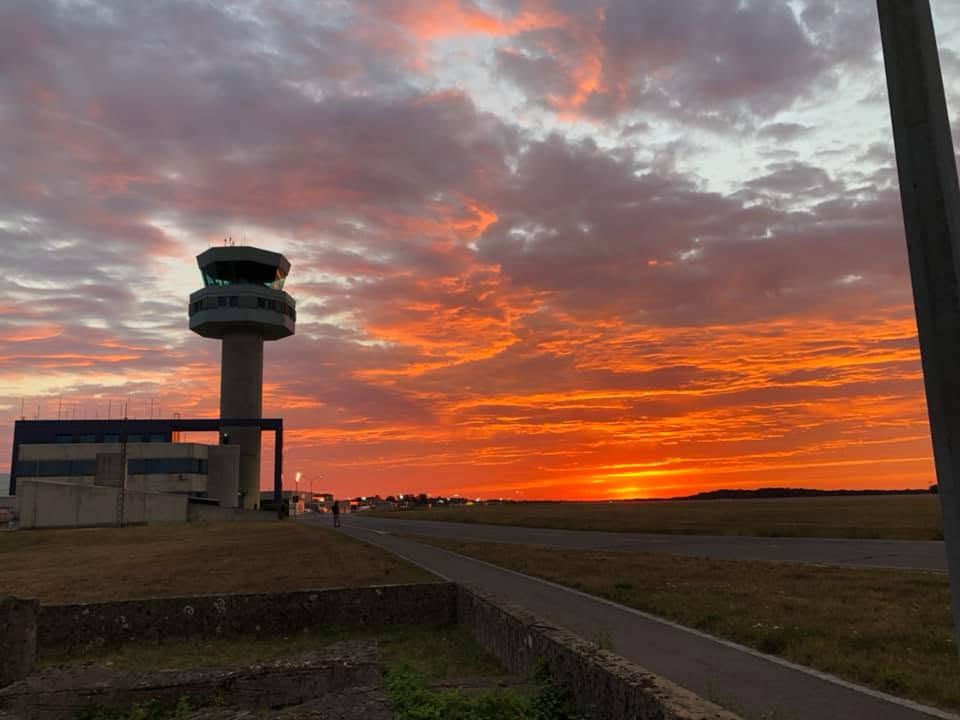
Tower Control works from the control tower with a direct outside view over the airport environment.
What Does a Tower Controller Do?
Tower Control operates from the upper part of the control tower, around 30 metres above the airport. From this position, the controller has a direct visual overview of the runway, taxiways, apron areas and the surrounding control zone.
At Luxembourg Airport, the Tower Controller is responsible for the Control Zone (CTR), which extends from ground level up to 2,500 feet QNH and covers the immediate airspace around the airport. Above this area, responsibility is transferred to Approach Control in the Terminal Control Area.
The work of a Tower Controller is highly dynamic. The controller must coordinate arriving and departing aircraft, monitor runway occupancy, manage aircraft and vehicle movements on the ground, and provide clear instructions to pilots. This includes both IFR and VFR traffic.
Main Tower Control Tasks
- Authorize take-offs and landings.
- Control aircraft on and near the runway.
- Manage taxiing aircraft and runway crossings.
- Coordinate IFR and VFR traffic in the control zone.
- Monitor helicopters, training flights, private aviation and special operations.
- Maintain a safe and efficient traffic sequence.
Operational Focus
Tower Control requires continuous visual observation, rapid decision-making and strong situational awareness. The traffic mix at Luxembourg includes commercial airliners, cargo aircraft, general aviation, training flights, rescue and police helicopters, and a significant amount of VFR traffic.
Tower Controllers combine visual observation with surveillance information and radio communication.
What Does an Approach Controller Do?
Approach Control is not located in the tower cab and does not rely on a direct outside view of the runway. Instead, the Approach Controller works primarily with surveillance systems and radio communication to manage aircraft in the Terminal Control Area (TMA).
The TMA begins above the control zone, from approximately 2,500 feet, and extends up to the upper levels assigned to Luxembourg terminal airspace. Although the area is relatively small compared with major international airports, it is operationally complex because it connects Luxembourg Airport with the surrounding European airway network.
The main task of the Approach Controller is to manage arriving and departing IFR aircraft. Arrivals are guided towards the final approach path, often using headings, altitude instructions and speed control to establish them safely on the Instrument Landing System. Departures are integrated into the airspace and normally follow Standard Instrument Departure routes until they join the requested airway.
Main Approach Control Tasks
- Vector arriving IFR aircraft towards the final approach.
- Separate IFR traffic using radar and procedural rules.
- Manage climb and descent profiles.
- Coordinate departures from the airport into the airway system.
- Provide traffic information where required.
- Coordinate closely with Tower Control and adjacent ATC units.
Operational Focus
Approach Control requires precise planning, anticipation and the ability to build a safe traffic sequence several minutes ahead. The work is less visually oriented than Tower Control, but it is highly tactical and depends on accurate surveillance, clear phraseology and constant coordination.

Approach Control manages aircraft in the terminal airspace around Luxembourg Airport.
Tower vs Approach Control: The Main Differences
| Aspect | Tower Controller | Approach Controller |
|---|---|---|
| Working position | Control tower cab with direct outside view. | Operational room using surveillance systems, radio and coordination tools. |
| Main area of responsibility | Runway, taxiways, airport vicinity and Control Zone. | Terminal Control Area surrounding and above the airport. |
| Traffic focus | Take-offs, landings, runway occupancy, ground movements, VFR and local traffic. | Arriving and departing IFR traffic, sequencing, vectoring and separation. |
| Primary tools | Visual observation, radio communication, surveillance information and airport systems. | Radar/surveillance display, radio communication, flight data and coordination with other units. |
| Decision style | Very short-term, fast-paced, often based on live visual assessment. | Tactical planning, sequencing and separation over a wider airspace picture. |
Approach Controllers use surveillance information to manage the flow of arriving and departing IFR aircraft.
How Tower and Approach Work Together
Tower and Approach Control are separate operational positions, but they are closely connected. An arriving aircraft is first managed by Approach Control while it is descending and being sequenced towards Luxembourg Airport. When the aircraft is established for landing and approaching the final phase of flight, responsibility is transferred to Tower Control.
For departing aircraft, the process works in the opposite direction. Tower Control manages the aircraft on the ground and during take-off. After departure, the aircraft is transferred to Approach Control, which manages the climb and integration into the surrounding airspace.
This cooperation requires clear communication, precise coordination and a shared understanding of the traffic situation. Both positions contribute to the same goal: safe, efficient and predictable air traffic operations at Luxembourg Airport.

At an airport with mixed traffic, situational awareness and coordination between positions are essential.
Which Role Is More Demanding?
Both roles are demanding, but in different ways. Tower Control is often more immediate and visually intense. Decisions may need to be made within seconds, especially when runway movements, landing traffic, taxiing aircraft and VFR traffic interact.
Approach Control is demanding because it requires continuous anticipation. Controllers must maintain separation, build arrival sequences, manage altitude and speed profiles, and coordinate with adjacent airspace while keeping the overall traffic picture stable.
Neither role is simply “easier” or “harder”. They require different skills, different forms of concentration and different operational reflexes. A professional air traffic controller must be able to understand the full system, not only one isolated position.
Interested in Becoming an Air Traffic Controller?
Air traffic control is a safety-critical profession. It requires concentration, responsibility, teamwork, resilience and the ability to make clear decisions under pressure. Tower and Approach Control are different, but both are essential parts of the air traffic management system at Luxembourg Airport.
If you are interested in the profession, the next step is to learn more about the application process and the requirements for becoming an air traffic controller.